Location:
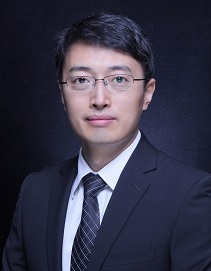
Lei ZHANG, Ph.D.
Professor
School of Environment
Nanjing University
Email: [email protected]
ORCID: 0000-0003-2796-6043
Education
2007/09–2012/06 Ph.D. Degree in Environmental Science and Engineering, School of Environment, Tsinghua University
2003/08–2007/07 B.E. Degree in Environmental Engineering, Department of Environmental Science and Engineering, Tsinghua University
Professional Experience
2024/12– Professor, School of Environment, Nanjing University
2017/09–2024/12 Associate Professor, School of Environment, Nanjing University
2015/09–2017/06 Postdoctoral Research Associate, School of Science, Technology, Engineering and Mathematics, University of Washington (Bothell), USA
2014/11–2015/01 Visiting Scholar, School of Science, Technology, Engineering and Mathematics, University of Washington (Bothell), USA
2012/07–2015/07 Postdoctoral Research Associate, School of Environment, Tsinghua University
2010/03–2010/06 Visiting Scholar, Department of Energy, Environmental and Chemical Engineering, Washington University in St. Louis, USA
2008/06–2008/07 Visiting Scholar, Institute for Atmospheric Pollution Research, National Research Council, Italy
2007/02–2007/03 Visiting Scholar, Energy Technology Centre Branch, Canada Centre for Mineral and Energy Technology (CANMET), Canada
Research Area
Global/Regional Atmospheric Environmental Quality Improvement and Synergistic Implementation of International Conventions
Research Interests
l Formation, Transformation and Elimination of Key Air Pollutants
l Intelligent Perception and Source Tracing of Air Pollution
l Simulation and Regulation of Regional Air Pollution
l Environmental Big Data and Machine Learning
Academic Service
l Rostered Expert of the Open-Ended Scientific Group of the Minamata Convention on Mercury
l Assistant Executive Editor of Eco-Environ. Health
l Vice Chair of the Development Committee and Youth Editor of Bull. Environ. Contam. Toxicol.
l Invited Reviewer for Top Journals in Environmental Earth Sciences including Nat. Commun., Environ. Sci. Technol., Atmos. Chem. Phys., J. Geophys. Res.-Atmos., etc.
l Chair of the Organizing Committee of the International Workshop on Air Pollution, Climate Change and Human Health, Nanjing, China, July 16–18, 2019.
l Research Associate of the State Key Laboratory of Water Pollution Control and Green Resource Recycling
l Research Associate of the Jiangsu Collaborative Innovation Center of Atmospheric Environment and Equipment Technology
Teaching
l Environmental Statistics (undergraduate course)
l Introduction to Machine Learning in Environmental Science (undergraduate course)
l The Light of Science (Young Scholars)—Exploring Big Data Science behind “Clean Water and Blue Sky” (undergraduate course)
l Sino-Norwegian Summer School on Ecological and Environmental Effects of Global Air Pollution (undergraduate course)
l Engineering Ethics (graduate course)
Selected Publications
1. Liu Y J, Zhang L*, Wang Z R, Wu R R, Liu X, Zhu X Z, Li H, Bian Y D, Wang Z, Zhao Y. An inverse dispersion method based on fingerprint species for estimating emission intensities of volatile organic compounds in the chemical industry. ACS ES&T Air, 2025, 2(7): 1161–1171. (ACS ES&T Air supplementary cover paper)
2. Yang J Y, Wang Y T, Zhang L, Zhao Y. Investigating the response of China's surface ozone concentration to the future changes of multiple factors. Atmos. Chem. Phys., 2025, 25(4): 2649–2666.
3. Zhang L*, Zhou H T, Zhang W K, Zhou H, Zhang G C, Zhou P S, Wang Z, Wang Q G, Zhao Y. Intercomparison of methods for atmospheric reactive mercury observations: evidences to interpret what we are actually measuring. Atmos. Environ., 2024, 333: 120637.
4. Zhang Y, Zhang L*, Cao S Z, Liu X, Jin J M, Zhao Y. Improved anthropogenic mercury emission inventories for China from 1980 to 2020: toward more accurate effectiveness evaluation for the Minamata Convention. Environ. Sci. Technol., 2023, 57(23): 8660–8670.
5. Zhang L*, Zhang G C, Zhou P S, Zhao Y. A review of dry deposition schemes for speciated atmospheric mercury. Bull. Environ. Contam. Toxicol., 2023, 110(1): 16.
6. Wang Z R, Zhang L*, Yu P W, Li X, Wang Q X, Wang X F, Sun X M, Zhu X Z, Zhao Y. A featured-species-based receptor inversion technology for estimating emission source intensities of volatile organic compounds. Acta Scientiae Circumstantiae, 2023, 43(9): 298–310. (in Chinese)
7. Dai L, Zhao Y, Zhang L, Chen D, Wu R R. Particle number size distributions and formation and growth rates of different new particle formation types of a megacity in China. J. Environ. Sci., 2023, 131: 11–25.
8. Gu C, Zhang L, Xu Z D, Xia S J, Wang Y T, Li L, Wang Z R, Zhao Q Y, Wang H Y, Zhao Y. High-resolution regional emission inventory contributes to the evaluation of policy effectiveness: a case study in Jiangsu Province, China. Atmos. Chem. Phys., 2023, 23(7): 4247–4269.
9. Chen D, Zhao W X, Zhang L*, Zhao Q Y, Zhang J, Chen F, Li H P, Guan M, Zhao Y. Characterization and source apportionment for light absorption amplification of black carbon at an urban site in eastern China. Sci. Total Environ., 2023, 865: 161180.
10. Cao S Z, Zhang L*, Zhang Y, Wang S X, Wu Q R. Impacts of removal compensation effect on the mercury emission inventories for nonferrous metal (zinc, lead, and copper) smelting in China. Environ. Sci. Technol., 2022, 56: 2163–2171.
11. Dai L, Zhang L, Chen D, Zhao Y. Assessment of carbonaceous aerosols in suburban Nanjing under air pollution control measures: Insights from long-term measurements. Environ. Res., 2022, 212: 113302.
12. Zhang L*, Zhu X Z, Wang Z R, Zhang J, Liu X, Zhao Y. Improved speciation profiles and estimation methodology for VOCs emissions: A case study in two chemical plants in eastern China. Environ. Pollut., 2021, 291: 118192.
13. Zhang L*, Zhou P S, Zhong H, Zhao Y, Dai L, Wang Q G, Xi M X, Lu Y, Wang Y T. Quantifying the impacts of anthropogenic and natural perturbations on gaseous elemental mercury (GEM) at a suburban site in eastern China using generalized additive models. Atmos. Environ., 2021, 247: 118181.
14. Yang Y, Zhao Y, Zhang L, Zhang J, Huang X, Zhao X F, Zhang Y, Xi M X, Lu Y. Improvement of the satellite-derived NOx emissions on air quality modeling and its effect on ozone and secondary inorganic aerosol formation in the Yangtze River Delta, China. Atmos. Chem. Phys., 2021, 21(2): 1191–1209.
15. Gustin M S, Dunham-Cheatham S M, Zhang L, Lyman S, Choma N, Castro M. Use of membranes and detailed HYSPLIT analyses to understand atmospheric particulate, gaseous oxidized, and reactive mercury chemistry. Environ. Sci. Technol., 2021, 55(2): 893–901.
16. Zhang L*, Zhou P S, Cao S Z, Zhao Y. Atmospheric mercury deposition over the land surfaces and the associated uncertainties in observations and simulations: a critical review. Atmos. Chem. Phys., 2019, 19(24): 15587–15608.
17. Gustin M S, Dunham-Cheatham S, Zhang L. Comparison of 4 methods for measurement of reactive, gaseous oxidized, and particulate bound mercury. Environ. Sci. Technol., 2019, 53(24): 14489–14495.
18. Obrist D, Kirk J L, Zhang L, Sunderland E M, Jiskra M, Selin N E. A review of global environmental mercury processes in response to human and natural perturbations: Changes of emissions, climate, and land use. Ambio, 2018, 47(2): 116–140. (ESI highly cited paper)
19. Zhang L*, Jaffe D A, Gao X, McClure C D. A quantification method for peroxyacetyl nitrate (PAN) using gas chromatography (GC) with a non-radioactive pulsed discharge detector (PDD). Atmos. Environ., 2018, 179: 23–30.
20. Zhang L*, Jaffe D A. Trends and sources of ozone and sub-micron aerosols at the Mt. Bachelor Observatory (MBO) during 2004–2015. Atmos. Environ., 2017, 165: 143–154.
21. Jaffe D A, Zhang L. Meteorological anomalies lead to elevated O3 in the western US in June 2015. Geophys. Res. Lett., 2017, 44(4): 1990–1997. (GRL cover paper)
22. Zhang L, Wang L, Wang S X, Dou H Y, Li J F, Li S, Hao J M. Characteristics and sources of speciated atmospheric mercury at a coastal site in the East China Sea region. Aerosol Air Qual. Res., 2017, 17(12): 2913–2923.
23. Hui M L, Zhang L*, Wang S X, Cai S Y, Zhao B. Evaluation of co-benefits on atmospheric mercury emission control for coal combustion in China and future projection. Acta Scientiae Circumstantiae, 2017, 37(1): 11–22. (in Chinese)
24. Zhang L, Wang S X, Wu Q R, Wang F Y, Lin C J, Zhang L M, Hui M L, Yang M, Su H T, Hao J M. Mercury transformation and speciation in flue gases from anthropogenic emission sources: a critical review. Atmos. Chem. Phys., 2016, 16(4): 2417–2433.
25. Ancora M P, Zhang L, Wang S X, Schreifels J J, Hao J M. Meeting Minamata: cost-effective compliance options for atmospheric mercury control in Chinese coal-fired power plants. Energ. Policy, 2016, 88: 485–494.
26. Zhang L, Wang S X, Wang L, Wu Y, Duan L, Wu Q R, Wang F Y, Yang M, Yang H, Hao J M, Liu X. Updated emission inventories for speciated atmospheric mercury from anthropogenic sources in China. Environ. Sci. Technol., 2015, 49(5): 3185–3194. (ESI highly cited paper)
27. Ancora M P, Zhang L, Wang S X, Schreifels J, Hao J M. Economic analysis of atmospheric mercury emission control for coal-fired power plants in China. J. Environ. Sci., 2015, 33: 125–134.
28. Hui M L, Zhang L, Wang Z G, Wang S X. The mercury mass flow and emissions of coal-fired power plants in China. China Environmental Science, 2015, 35(8): 2241–2250. (in Chinese; Top 10 Articles of 2015 published on China Environmental Science)
29. Wang S X, Zhang L, Wang L, Wu Q R, Wang F Y, Hao J M. A review of atmospheric mercury emissions, pollution and control in China. Front. Env. Sci. Eng., 2014, 8(5): 631–649.
30. Zhang L, Wang S X, Wang L, Hao J M. Atmospheric mercury concentration and chemical speciation at a rural site in Beijing, China: implication of mercury emission sources. Atmos. Chem. Phys., 2013, 13(20): 10505–10516.
31. Zhang L, Daukoru M, Torkamani S, Wang S X, Hao J M, Biswas P. Measurements of mercury speciation and fine particle size distribution on combustion of China coal seams. Fuel, 2013, 104: 732–738.
32. Zhang L, Wang S X, Meng Y, Hao J M. Influence of mercury and chlorine content of coal on mercury emissions from coal-fired power plants in China. Environ. Sci. Technol., 2012, 46(11): 6385–6392.
33. Zhang L, Wang S X, Wu Q R, Meng Y, Yang H, Wang F Y, Hao J M. Were mercury emission factors for Chinese non-ferrous metal smelters overestimated? Evidence from onsite measurements in six smelters. Environ. Pollut., 2012, 171: 109–117.
34. Wang S X, Zhang L, Zhao B, Meng Y, Hao J M. Mitigation potential of mercury emissions from coal-fired power plants in China. Energ. Fuel., 2012, 26(8): 4635–4642.
35. Wang S X, Zhang L, Li G H, Wu Y, Hao J M, Pirrone N, Sprovieri F, Ancora M P. Mercury emission and speciation of coal-fired power plants in China. Atmos. Chem. Phys., 2010, 10(3): 1183–1192.
36. Wang S X, Zhang L, Wu Y, Ancora M P, Zhao Y, Hao J M. Synergistic mercury removal by conventional pollutant control strategies for coal-fired power plants in China. J. Air Waste Manage. Assoc., 2010, 60(6): 722–730.
Book(s)
Wang S X, Zhang L, Wu Q R, Wang F Y. Emission Characteristics and Environmental Impacts of Atmospheric Mercury in China and Control Approaches. Science Press, Beijing, 2016.
Awards
l The 2nd Prize of National Teaching Achievement Award in Higher Education (12/15)
l Excellent Youth Backbone Educator of Jiangsu University Qinglan Program
l Doctor of Entrepreneurship and Innovation of Jiangsu Province
l Supervisor of Jiangsu Provincial Excellent Professional Master’s Thesis
l The 2nd Prize in Jiangsu Provincial University Micro-Lecture Teaching Competition
l Outstanding Teaching Award for Youth Teachers of Nanjing University
l The 1st Prize in Teaching Competition of Nanjing University
l “My Favorite Academic Advisor” in School of Environment, Nanjing University
l “My Favorite Teacher” in School of Environment, Nanjing University
l Outstanding Graduate Ph.D. Student of Beijing
l Outstanding Postdoctor of Tsinghua University
l The 1st Prize of Excellent Ph.D. Thesis of Tsinghua University
Opportunities
Ph.D. and M.S. students in environmental science and engineering
Postdoctoral research associates